CHIPIN’ WOOD
From Blank to Something Worth Keeping
The making of Inner Sanctuary.
Back to Workshop
By Rogene Sears | September 26, 2026
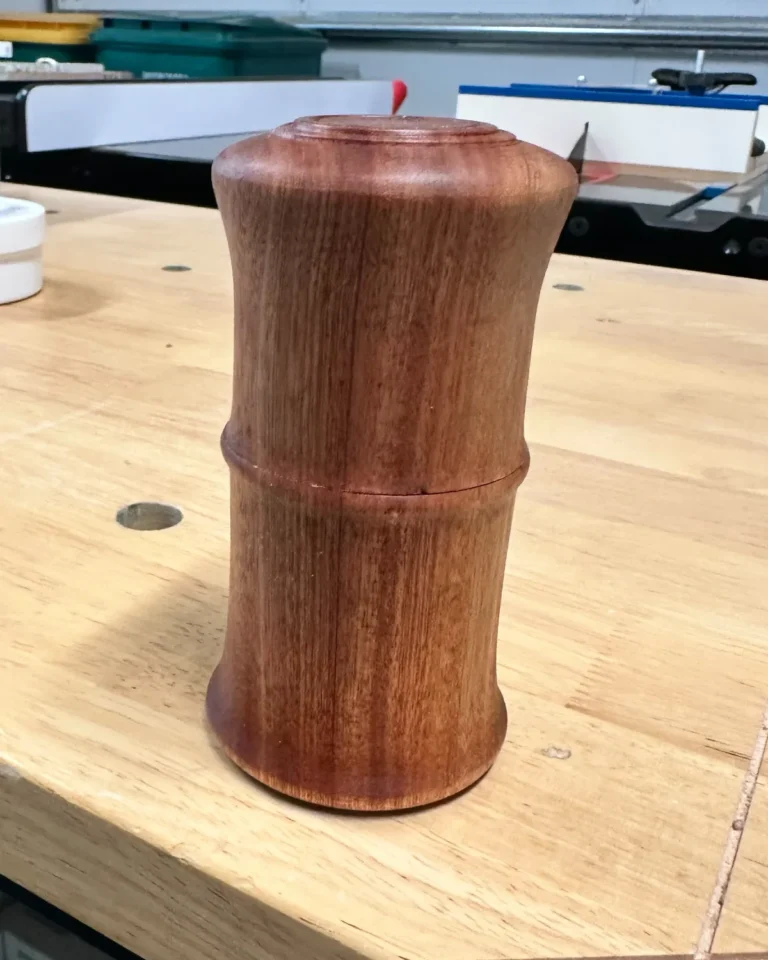
A finished piece doesn’t reveal every step that went into making it. Looking at Inner Sanctuary, you see the flowing grain of Sipo mahogany, a gently flared profile, and a lid that brings the form together. What you don’t see is how the piece was held while those details were completed.
The most challenging part was creating the friction fit between the lid and the body. That fit would serve two purposes: closing the finished box and holding the lid securely enough for me to finish its top.
Beginning with the blank
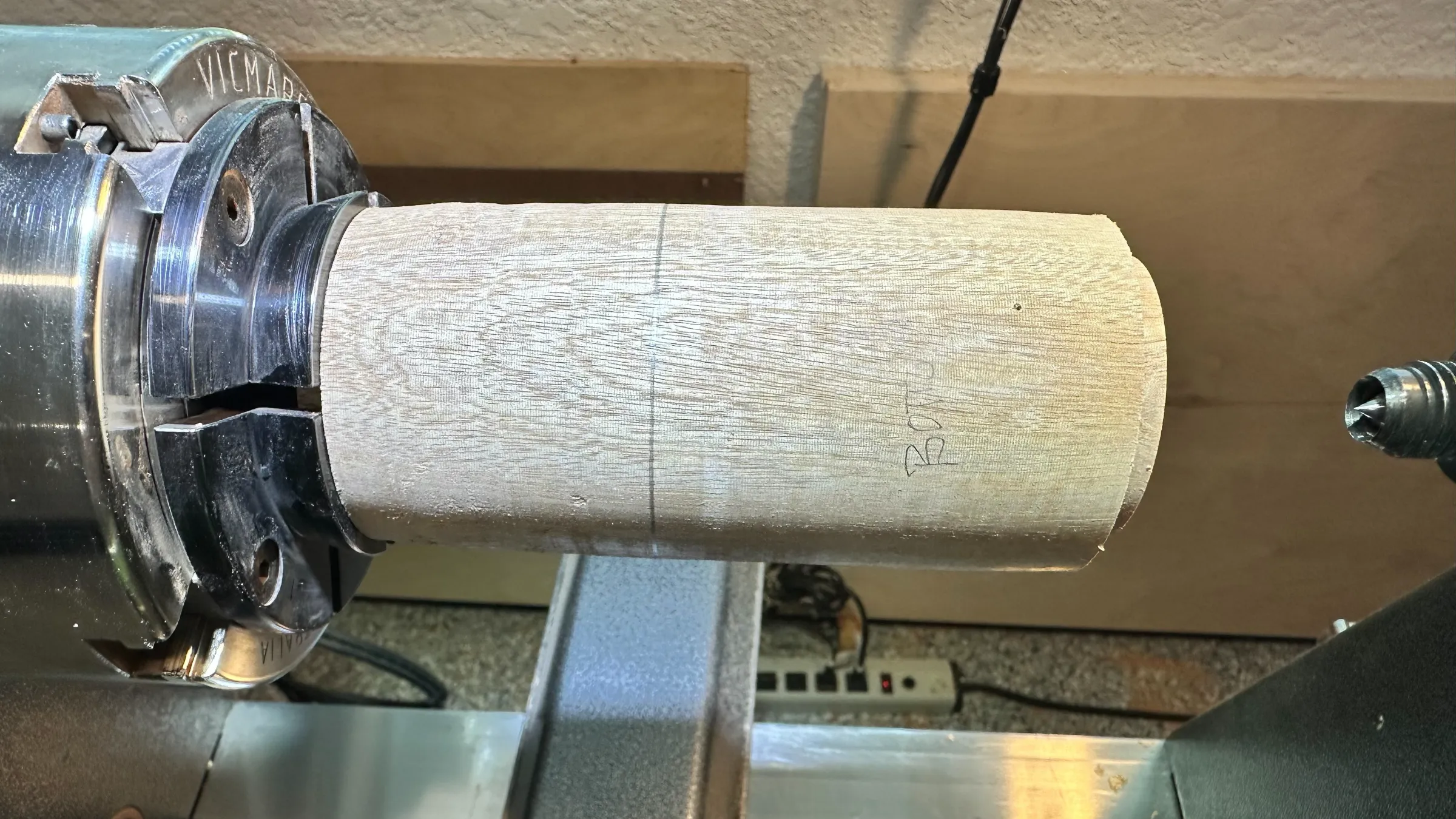
Inner Sanctuary began as a square blank of Sipo mahogany. I first turned it into a cylinder, then added pencil marks to establish where the different parts of the piece would take shape.
Next, I formed a dovetail to fit inside the chuck. Using a thin parting tool, I separated the top from the bottom, leaving the bottom mounted on the lathe for shaping.
As material came away, the proportions developed and the grain became more visible. I shaped the body’s gently flared profile, hollowed the interior, and prepared the opening where the lid would fit. That connection would become the most challenging part of the piece.
Getting the fit right
The friction fit required the most patience. The lid needed to sit securely on the body and still come away with a gentle pull. Small adjustments mattered because each one changed how the two parts came together.
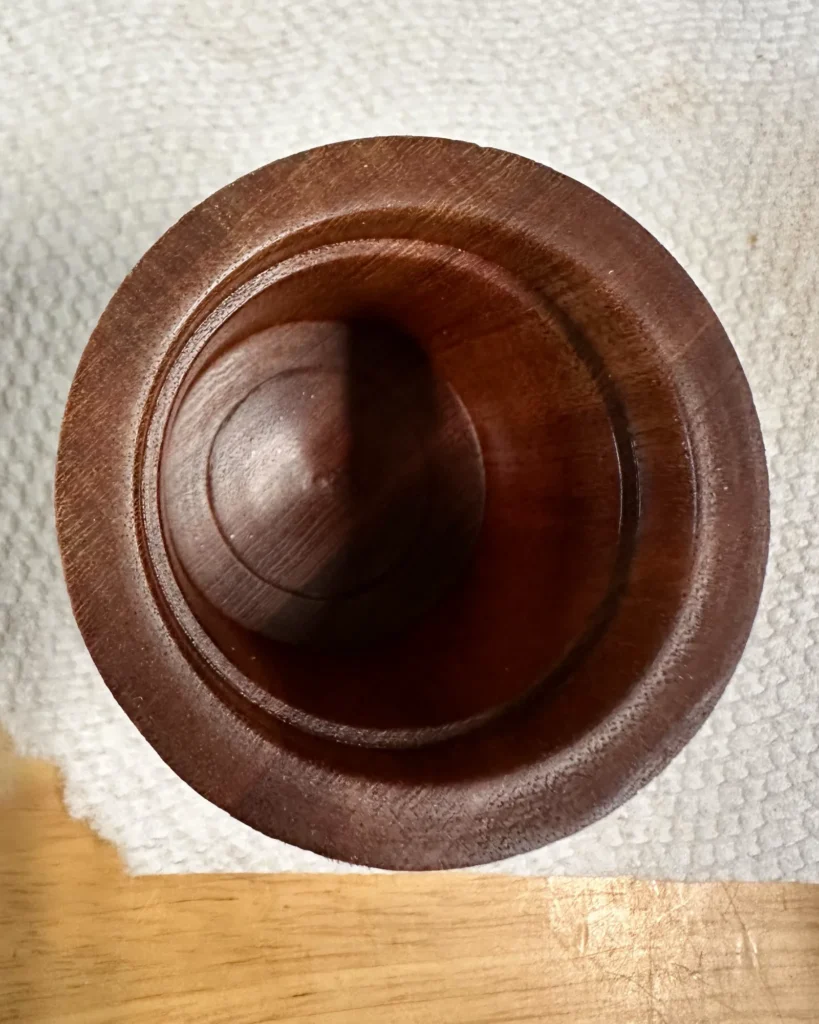
That fit also became part of the turning process. With the body held in the lathe’s chuck, I fitted the lid onto it. The body then acted as a jam chuck—a support that holds another part through a close friction fit.
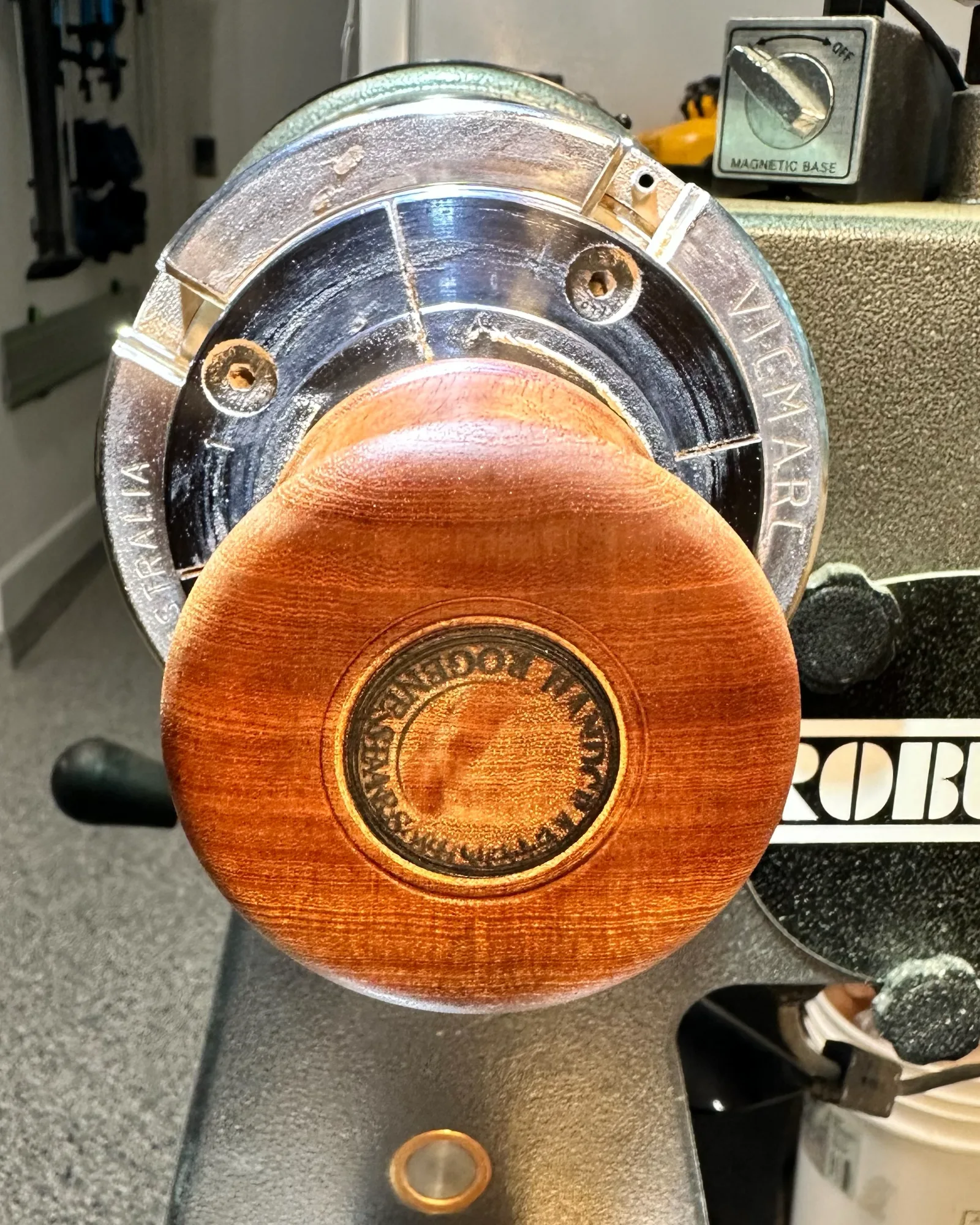
This allowed me to complete the top of the lid, including its concentric details. The connection I had carefully worked to create was now holding the lid while I finished its exposed surface.
It is one of the details I find most interesting about making a lidded piece: part of the finished object can also become the means of completing it.
A second jam chuck for the bottom
Once the lid was complete, the bottom of the box still needed attention. The section that had been held in the metal chuck was now the area I needed to reach.
For that step, I made a second jam chuck from scrap wood. This support fitted into the opening of the body, allowing me to reverse the box and expose its underside.
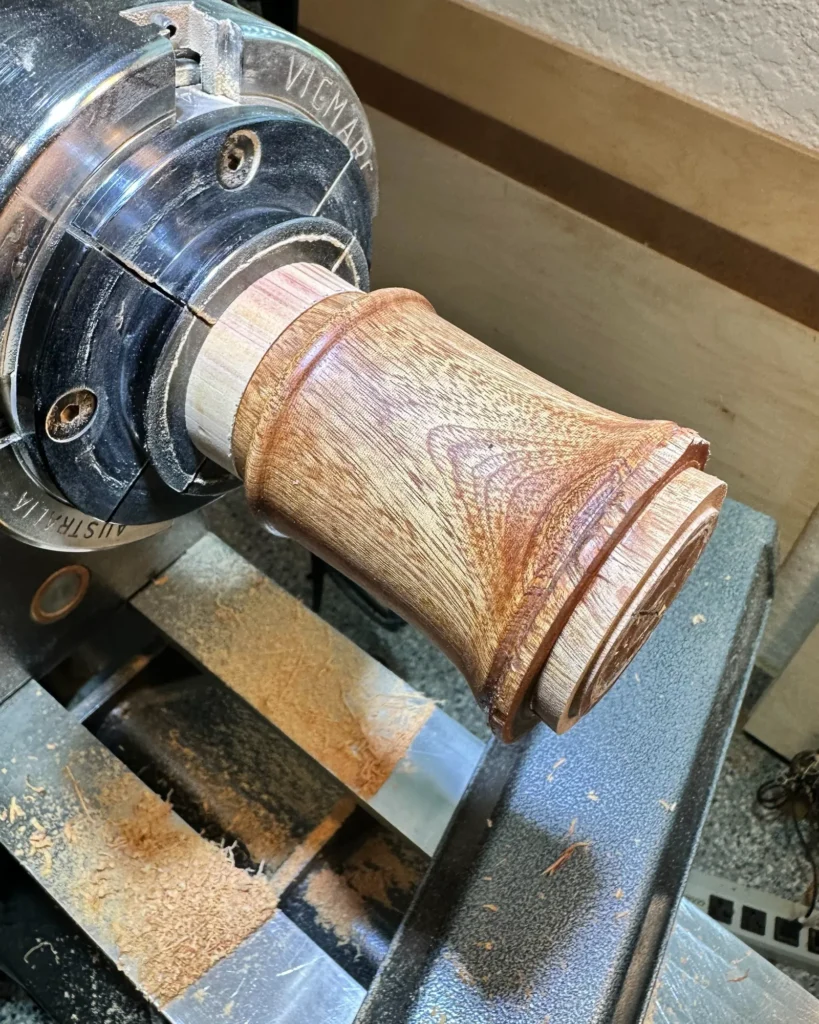
The scrap wood gave me a way to hold the body while completing the area that had previously been hidden in the chuck. Although this temporary support would never become part of Inner Sanctuary, making it was an essential step in finishing the piece.
The two jam chucks served different stages of the work. First, the body held the lid so I could finish the top. Then the scrap-wood support held the body so I could finish the bottom.
Bringing the two parts together
With the underside complete, the lid and body could come together as a finished piece. The raised bead defines their meeting point, and the concentric details draw the eye to the top. Around the form, the Sipo mahogany’s grain gives the surface its character.
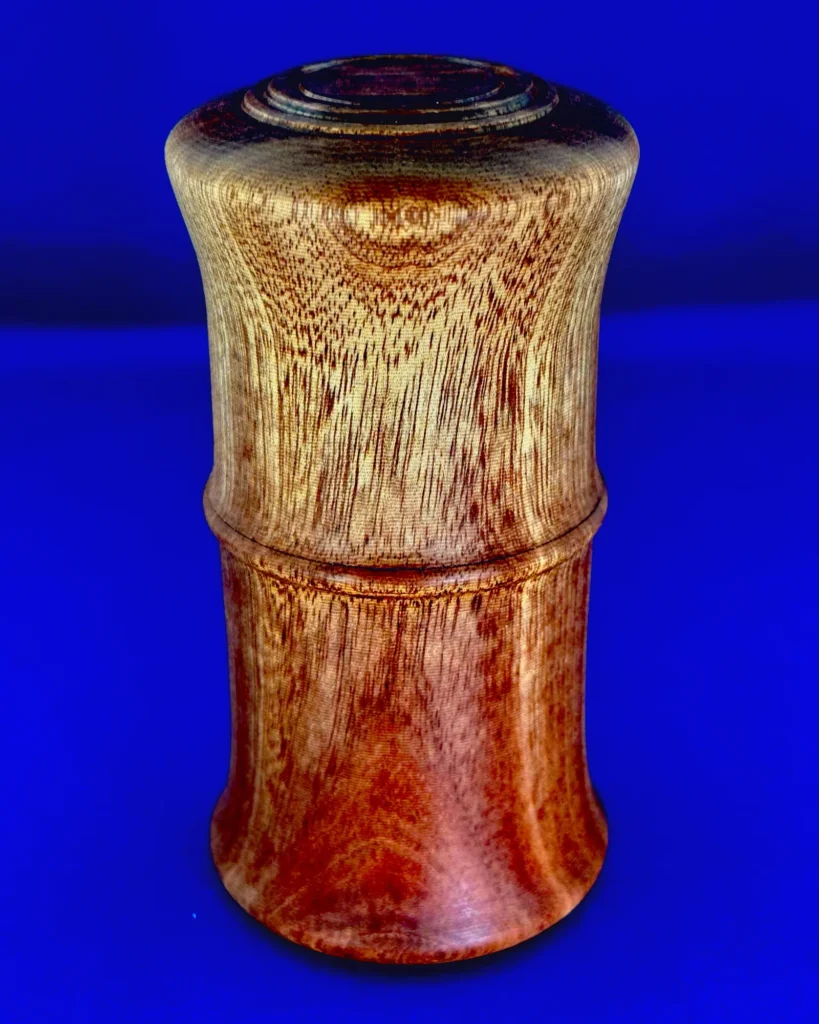
Inner Sanctuary was made to hold something deeply personal—a treasured keepsake or a small portion of cremated remains. Its intimate scale offers a discreet and dignified place for remembrance.