
CHIPIN’ WOOD
Devices to Hold Carvings
A simple homemade holding board with movable dowel pegs for supporting differently shaped carvings.
Back to Workshop
By Rogene Sears | February 20, 2022
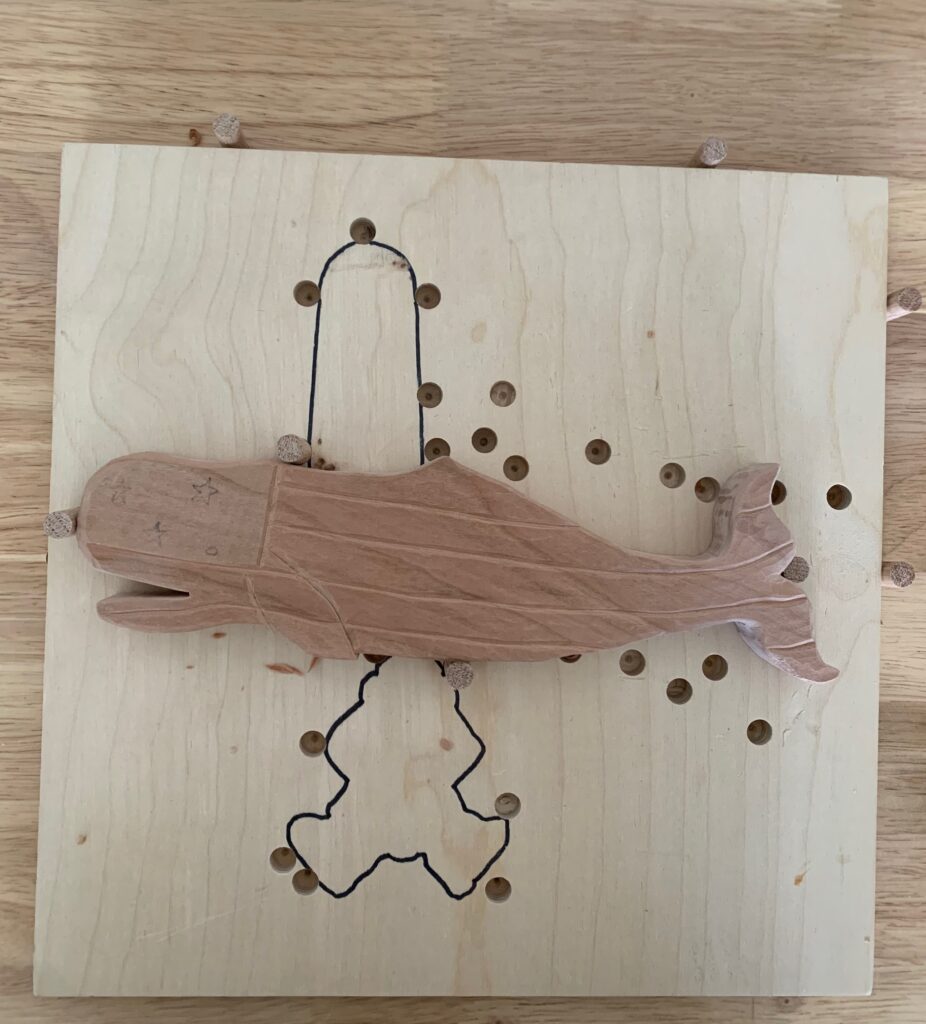
My homemade holding board uses movable dowel pegs to support the carving while I work.
When I began carving, I bought a protective glove for my left hand. But I didn’t always wear it, and I often held the wood in that hand while carving. I ended up cutting myself more than once.
That sent me looking for better ways to hold the work. After researching different holding devices, I made a simple variation on a carver’s bench hook. It became the one I reached for most often.
My homemade holding board
The board is a 12-by-12-inch piece of ¾-inch birch plywood, drilled with ⅜-inch holes. Removable oak dowels act as stops around the carving.
II cut the ⅜-inch dowels to different lengths so I could choose pegs that supported the piece without getting in the way of my tools. The holes are scattered across the board, giving me several options for positioning the stops around different shapes.
To use it, I place the carving on the board and insert at least four dowel pegs into nearby holes around the piece. The pegs help keep it from sliding while leaving much of the carving accessible.
Keeping the board in place
I drilled four ⅜-inch dog holes in my workbench and fitted them with dowels. Matching holes in the plywood board fit over those dowels, holding the board in position while I carve.
When I originally made it in 2022, my material cost was under $10. It was a straightforward shop project using a small piece of plywood and oak dowels.
Working with different shapes
What I like about this setup is how easily I can rearrange it. Moving a few pegs lets me accommodate another carving or reposition the piece to reach a different area.
The pegs act as stops rather than clamps, so they don’t lock the carving down in every direction. Before cutting, check that both the board and the workpiece are stable for the direction of the cut. If the piece can lift, rock, or turn, it needs a different arrangement or another holding method.
IA holding device doesn’t replace careful tool control or appropriate hand protection. Keep your hands out of the tool’s path, even when the carving is supported.
Other approaches worth exploring
Different carvings call for different ways of holding them. A method that works for one shape may obstruct the tools or put pressure on a delicate area of another.
I found Roger Schroeder’s article, Shop-Made Holding Devices, in Woodcarving Illustrated helpful when exploring other approaches. It discusses several options, including a carver’s bench hook, a holding frame, and sandbag support.
My own board is a simple solution, but being able to reposition the dowels has made it useful for the work I do.
Back to Workshop